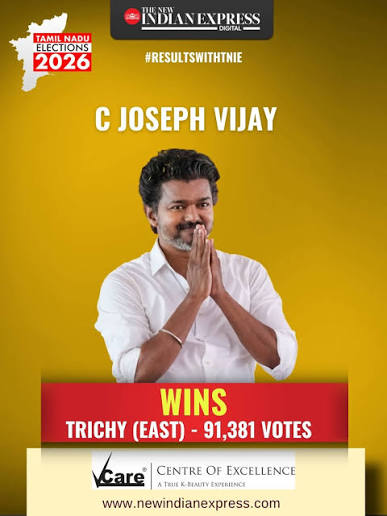
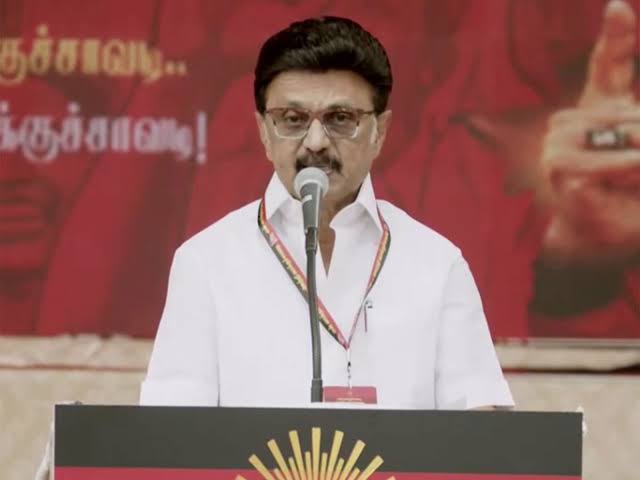
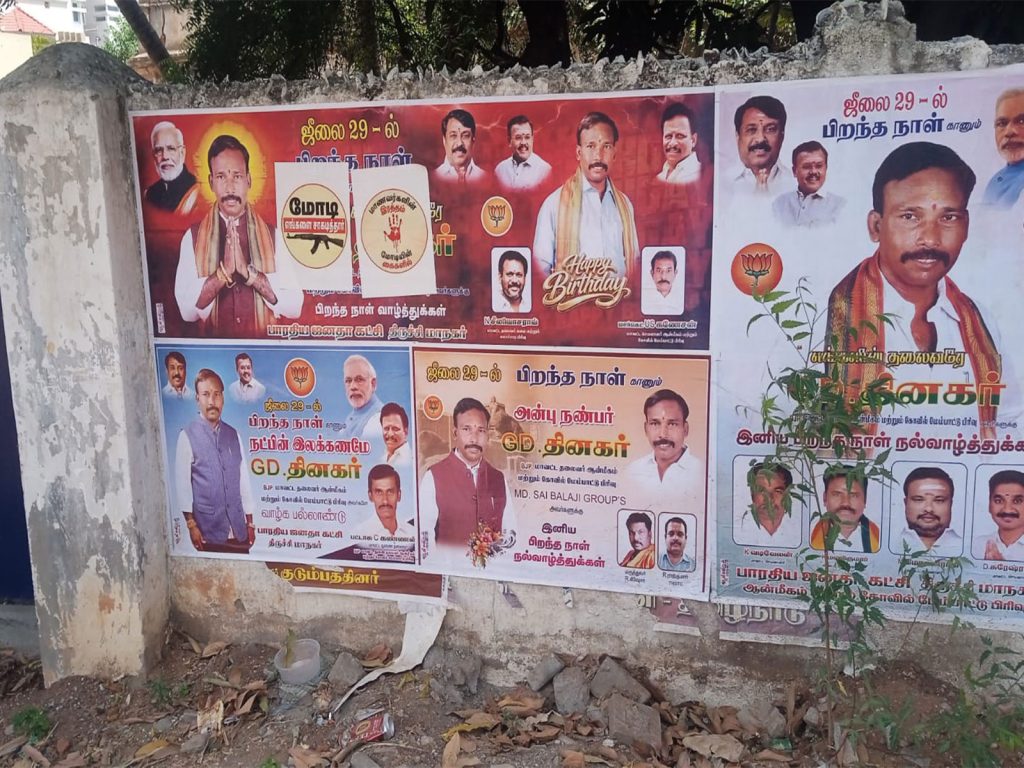
Political competition around the Tiruchirappalli (Trichy) constituencies has intensified significantly in the run-up to the 2026 Tamil Nadu Assembly election. Trichy has emerged as an important political battleground because of its central location, large urban and rural population, and influence over the surrounding Cauvery-region constituencies. The entry of Tamilaga Vettri Kazhagam (TVK) into the electoral contest has added another dimension to the competition among the major political parties. Major political parties in the contest The political landscape around Trichy involves several major parties and alliances, including the DMK, AIADMK, TVK, BJP and other regional and national parties. Each political formation has been attempting to strengthen its organisation and voter base across the district. The DMK has traditionally maintained a strong organisational presence in several parts of Trichy and has sought to retain its influence through its alliance network and development-oriented campaign. AIADMK has also continued to work to rebuild its support base, while the BJP has attempted to expand its presence in central Tamil Nadu. The emergence of TVK under actor-turned-politician Vijay has made the contest more competitive, particularly among younger voters. TVK’s entry changes the political equation TVK’s participation has been one of the most significant developments in Trichy’s political landscape. Vijay’s decision to contest from Tiruchirappalli East brought considerable attention to the constituency. His campaign attracted large crowds and generated substantial political discussion in the city. The party attempted to present itself as an alternative to the established political parties and focused heavily on issues such as corruption, employment, education, governance and the welfare of ordinary people. The presence of TVK has consequently forced established parties to pay greater attention to constituencies where the new party could attract first-time voters and younger sections of the electorate. Trichy East becomes a key constituency Tiruchirappalli East became one of the most closely watched constituencies because of Vijay’s personal involvement. His victory there gave TVK an important electoral foothold. However, Vijay later chose to retain Perambur and vacated Trichy East, creating a by-election situation and keeping the constituency politically significant. The subsequent contest attracted attention because it became a test of whether TVK’s support in Trichy was based primarily on Vijay’s personal popularity or whether the party had developed sufficient organisational strength to retain the seat. DMK’s organisational strength The DMK has a long-standing political presence in Tiruchirappalli. Its organisational network includes district-level leadership, constituency units, youth and women’s wings and other affiliated structures. The party has also used major political gatherings in the district to strengthen its organisation. The DMK’s large state conference at Siruganur demonstrated the importance the party attaches to Trichy as a political centre. DMK leaders have highlighted government schemes, infrastructure development, social welfare programmes and the party’s ideological position as important components of their campaign. AIADMK attempts to regain ground The AIADMK remains another important political force in the district. The party has sought to consolidate its traditional support base and challenge the DMK’s dominance in several constituencies. Its campaign has generally focused on issues such as inflation, unemployment, law and order, government performance and welfare schemes. The party’s ability to convert its traditional support into votes remains an important factor in determining the outcome of closely contested Trichy constituencies. BJP expands its presence The BJP has also attempted to strengthen its political organisation in Trichy. The party has increased its focus on urban voters and sought to expand its support beyond areas where it traditionally has a smaller electoral base. Political controversies, including disputes involving posters and criticism of national leaders, have also contributed to increased political activity involving the BJP in the city. Key issues influencing voters Several local and regional issues are expected to influence political competition in Trichy: Youth voters One of the most important factors in the political competition is the growing importance of young voters. TVK has particularly attempted to attract young people through Vijay’s popularity and its emphasis on political change. Established parties have also increased their focus on youth employment, education, entrepreneurship, technology and skill development. The ability of different parties to attract first-time voters could therefore influence close contests in urban Trichy constituencies. Three-way and multi-cornered contests The emergence of TVK has the potential to turn traditionally bipolar or alliance-based contests into three-way or multi-cornered contests. For example, a constituency may see strong competition between a DMK candidate, an AIADMK candidate and a TVK candidate, with the BJP or another party also affecting the vote distribution. In such contests, even a relatively small shift in votes can change the final result. Vote splitting therefore becomes an important factor in analysing Trichy’s electoral dynamics. Importance of Trichy for Tamil Nadu politics Trichy is not only important because of its individual Assembly constituencies. Its central geographical position makes it an important political and organisational hub for parties attempting to reach voters across central Tamil Nadu. Major political meetings, conferences and rallies held in the city often attract participants from neighbouring districts. As a result, political developments in Trichy can have significance beyond the district itself. Overall impact The increasing competition has resulted in greater political activity across Trichy. Parties are strengthening their local organisations, conducting public meetings, highlighting development issues and attempting to build support among different sections of voters. The contest is particularly significant because it combines traditional party loyalties with the emergence of a new political force. The DMK and AIADMK are relying on their established organisational networks, while TVK is attempting to convert Vijay’s popularity into a durable political organisation. The BJP, meanwhile, is seeking to expand its presence.