

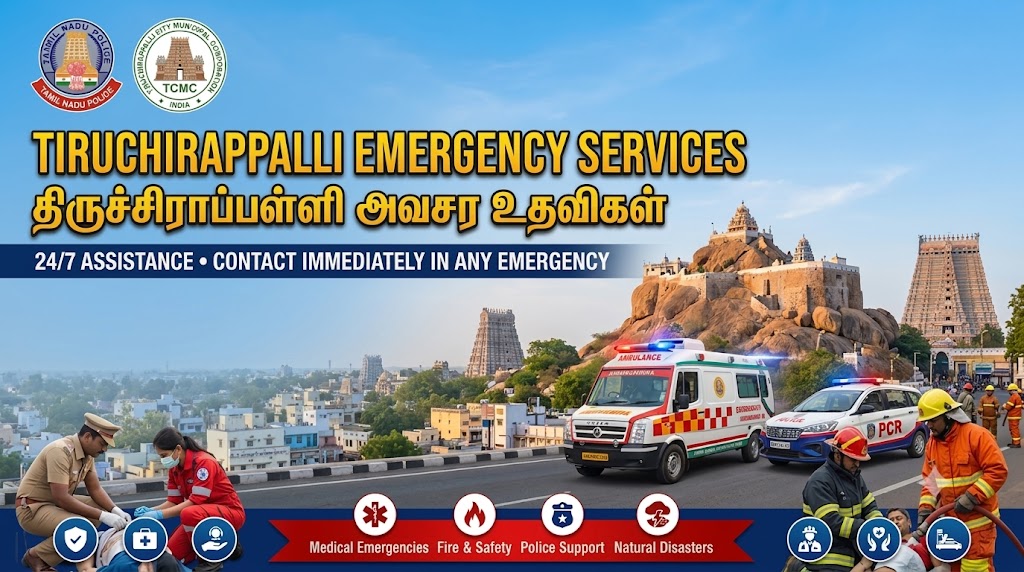
Safety Guidelines for Tiruchirappalli District

Safety guidelines in Tiruchirappalli district are important for protecting residents, visitors, students and travellers from accidents, natural disasters, health emergencies and other unexpected situations. As a district with busy roads, railway facilities, tourist destinations, temples, rivers and large public gatherings, following basic safety practices can help reduce risks and improve public preparedness.
.
🚨 1. Emergency Preparedness
Residents should know the important emergency services available in the district and keep essential contact information easily accessible.
During an emergency:
- Remain calm and follow instructions from authorities.
- Move to a safe location if instructed to evacuate.
- Avoid spreading unverified information on social media.
- Keep identification documents and essential medicines safely stored.
- Maintain emergency contact numbers for family members.
- Follow instructions issued by the District Administration and police.
🚗 2. Road Safety
Road safety is particularly important because Tiruchirappalli has busy highways, city roads and rural routes.
Motorists and pedestrians should:
- Wear helmets while riding two-wheelers.
- Wear seat belts in cars and other applicable vehicles.
- Follow speed limits and traffic signals.
- Avoid using mobile phones while driving.
- Never drive under the influence of alcohol or drugs.
- Use pedestrian crossings wherever available.
- Keep headlights and indicators in good working condition.
- Avoid dangerous overtaking.
Parents should also teach children basic road-crossing and traffic-safety rules.
🚆 3. Railway Safety
Tiruchirappalli is an important railway centre, so passengers should exercise caution around railway stations and tracks.
Passengers should:
- Cross railway tracks only at authorised crossings.
- Never attempt to board or get down from a moving train.
- Stand behind designated safety lines on platforms.
- Keep children under supervision.
- Avoid entering restricted railway areas.
- Follow announcements and railway staff instructions.
- Report unattended suspicious objects to railway authorities.
🌧️ 4. Rain and Flood Safety
During periods of heavy rainfall, low-lying areas can experience waterlogging or flooding.
Residents should:
- Avoid walking or driving through fast-moving floodwater.
- Stay away from overflowing rivers, canals and drainage channels.
- Avoid touching electrical equipment when standing in water.
- Keep important documents and electrical appliances above possible flood levels.
- Follow evacuation instructions if issued.
- Check official weather and district-administration announcements.
Children should never be allowed to play near flooded waterways.
⚡ 5. Electrical Safety
Electrical accidents can occur during heavy rain, flooding or because of damaged wiring.
Safety measures include:
- Do not touch exposed electrical wires.
- Stay away from fallen power lines.
- Do not operate electrical appliances with wet hands.
- Report damaged electrical infrastructure to the appropriate authorities.
- Use qualified electricians for electrical repairs.
- Switch off the main power supply if instructed during flooding.
🔥 6. Fire Safety
Fire safety is essential in homes, shops, offices, schools, hotels and public buildings.
People should:
- Keep fire extinguishers accessible where appropriate.
- Avoid overloading electrical sockets.
- Store flammable materials safely.
- Keep cooking areas properly ventilated.
- Never leave cooking appliances unattended.
- Keep emergency exits unobstructed.
- Learn basic fire-evacuation procedures.
In case of fire, leave the building quickly and contact emergency services rather than attempting to fight a large fire yourself.
🛕 7. Temple and Festival Safety
Tiruchirappalli has many important temples and religious events that attract large crowds.
During festivals and special occasions:
- Follow designated entry and exit routes.
- Stay with family members or groups.
- Keep children under close supervision.
- Follow security personnel instructions.
- Avoid pushing or rushing in crowded areas.
- Keep valuables secure.
- Follow temple rules regarding photography and electronic devices.
- Identify emergency exits and meeting points.
🏊 8. River and Water-Safety
Areas around the Cauvery, Kollidam and other water bodies require particular caution.
People should never:
- Enter deep or fast-flowing water without proper safety arrangements.
- Swim in unknown locations.
- Allow children to play near riverbanks without supervision.
- Approach flooded waterways.
- Attempt to cross a flooded bridge or road.
Even apparently shallow water can have strong currents.
🏥 9. Health and Medical Safety
Residents should seek medical assistance promptly when serious symptoms or injuries occur.
Basic health precautions include:
- Maintain personal hygiene.
- Drink safe and clean water.
- Wash hands regularly.
- Follow food-safety practices.
- Keep necessary medicines available.
- Seek professional medical advice when required.
- Follow public-health advisories during outbreaks or seasonal illnesses.
📱 10. Cyber and Digital Safety
People should also protect themselves from online fraud and scams.
Never share:
- OTPs
- UPI PINs
- ATM PINs
- Internet-banking passwords
- Card security information
- Aadhaar or other sensitive documents with unknown callers
Be especially cautious about fake police calls, digital-arrest scams, fraudulent job offers, fake bank messages and suspicious payment links.
👨👩👧 11. Safety for Children
Parents and schools should teach children:
- How to contact emergency services.
- Not to speak to unknown strangers without appropriate supervision.
- Basic road safety.
- Water safety.
- Fire safety.
- What to do if they become separated from family members.
Children should also know their parents’ phone numbers and an agreed family meeting point during large public events.
🧳 12. Safety for Tourists and Visitors
Visitors to Tiruchirappalli should take basic precautions while travelling around the district.
They should:
- Keep valuables secure.
- Use authorised transportation services.
- Follow local rules at temples and tourist sites.
- Keep emergency contact information available.
- Avoid isolated locations after dark.
- Follow safety instructions at heritage sites and water bodies.
- Stay hydrated during hot weather.
Helpline Numbers – Tiruchirappalli District
Here are some important emergency and district administration helpline numbers useful for residents and visitors in Tiruchirappalli. The numbers below are based primarily on the current Tiruchirappalli District Administration website, which was updated in August 2026.
| Service | Helpline / Contact Number |
|---|---|
| State Control Room | 1070 |
| Tiruchirappalli Collectorate Control Room | 1077 |
| District Emergency Operation Centre – 24×7 | 1077 / 0431-2418995 |
| Police Control Room | 100 |
| Accident / Emergency Ambulance | 108 |
| Tiruchirappalli Commissioner of Police | 0431-2332566 |
| Superintendent of Police Office | 0431-2333629 |
| Police Control Room | 0431-2333621 |
| District Collector Office | 0431-2415031 / 2415032 / 2415033 |
| Fire & Rescue – District Fire Officer | 9445086393 |
| Child Protection Officer | 6369102865 |
| Public Health – Deputy Director | 7358122697 |
| Food Safety – Designated Officer | 9944959595 |
| National Highways – Project Director | 9751177590 |
Disaster Management – Tiruchirappalli District
Disaster Management in Tiruchirappalli district focuses on preventing, preparing for, responding to, and recovering from natural and human-made disasters. The district administration works with various government departments, local bodies, emergency services, and communities to reduce risks and protect lives and property.
Tiruchirappalli may face hazards such as heavy rainfall, floods, cyclones, thunderstorms, drought, heatwaves, and fire-related emergencies. During such situations, the District Disaster Management authorities coordinate rescue operations, emergency communication, evacuation, temporary shelters, medical assistance, food and drinking-water supply, and restoration of essential services.
Preparedness activities include identifying vulnerable areas, maintaining emergency equipment, conducting awareness programmes and mock drills, monitoring weather conditions, and coordinating with Police, Fire and Rescue Services, Health Department, Revenue Department, local bodies, and other response agencies.
Public participation is also an important part of disaster management. Residents are encouraged to follow official warnings, keep emergency supplies ready, avoid unsafe areas during disasters, and cooperate with evacuation and rescue instructions.