Tiruchirappalli

2026

Breaking News

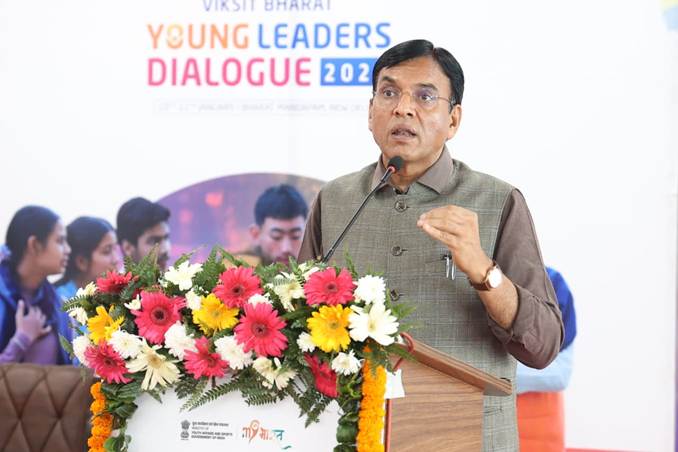
Viksit Bharat district-level competition announced

A district-level competition under the Viksit Bharat initiative has been announced to encourage young people, students and members of the community to share their ideas and creative perspectives on India’s development journey. The competition is intended to promote awareness of the vision of a developed India (Viksit Bharat) and encourage active participation in nation-building activities. Participants are expected to showcase their ideas, knowledge and creativity through activities such as essays, speeches, quizzes, presentations, creative content or other competition-based formats, depending on the categories announced by the organisers. Such activities provide an opportunity for participants to discuss India’s achievements, future opportunities and the role of citizens—particularly young people—in contributing to national development. At the district level, the programme can also help identify talented participants and innovative ideas from different educational institutions and communities. Successful participants may receive recognition and, where applicable, opportunities to progress to higher-level competitions. The initiative focuses on themes connected with economic growth, education, technology, innovation, sustainability, infrastructure, social development, employment and citizen participation. Participants are encouraged to think about practical solutions and express how India can become more prosperous, inclusive, technologically advanced and sustainable. The district-level competition is also expected to encourage collaboration among students, educational institutions, youth organisations and government authorities. By providing a platform for young citizens to express their views, the programme aims to strengthen awareness of national development goals and encourage constructive participation. Overall, the Viksit Bharat district-level competition provides an opportunity for participants to demonstrate their creativity and knowledge while engaging with the broader vision of India’s development. It can serve as a platform for discovering new ideas and motivating citizens to contribute to the country’s progress.

Breaking News

Vayalur/Manapparai area: electrician dies in electrocution

A tragic electrocution incident was reported in the Vayalur/Manapparai area of Tiruchirappalli district, in which an electrician reportedly lost his life after coming into contact with an electrical current while carrying out electrical work. The incident has caused shock and grief among local residents, colleagues and the victim’s family. According to the reported circumstances, the electrician was engaged in electrical-related work when he came into contact with a live electrical source. Despite efforts to respond to the situation, he could not be saved. The incident highlights the serious risks faced by electricians and other workers who handle electrical equipment, particularly when working around live wires, electrical panels or power connections. Following the incident, the matter was reported to the authorities, and the circumstances surrounding the electrocution were subject to investigation. Officials may examine the electrical connection, workplace conditions and safety procedures to determine how the accident occurred. The incident also serves as an important reminder about electrical safety. Workers should ensure that the power supply is switched off before beginning repair or maintenance work, use appropriate protective equipment, verify that circuits are de-energized, and follow established electrical-safety procedures. Employers and contractors also have an important responsibility to provide safe working conditions and appropriate safety equipment. The death has brought attention to the need for greater awareness of workplace electrical hazards in the region. Proper training, regular inspection of electrical installations and strict adherence to safety procedures can help reduce the possibility of similar accidents in the future.

Breaking News

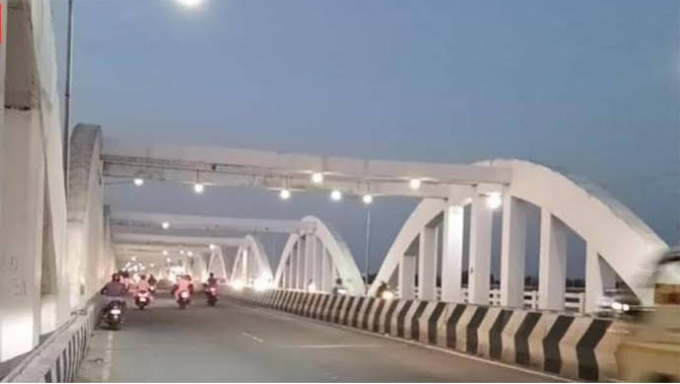
Kollidam Bridge gets new lights

The Kollidam Bridge in Tiruchirappalli district has received new lighting, giving the historic and strategically important river crossing a brighter and more attractive appearance during the night. The lighting initiative adds to the visual appeal of the bridge while supporting safer and more comfortable travel for people using the route after dark. The Kollidam Bridge is an important connectivity link across the Kollidam (Coleroon) River, serving local residents, commuters, commercial vehicles and visitors traveling between different parts of the region. With the installation of new lights, the bridge can now be more clearly visible at night, particularly around the roadway and surrounding areas. The new illumination also contributes to the beautification of the Tiruchirappalli region. A well-lit bridge can create an attractive nighttime landscape, especially when viewed from nearby roads and river surroundings. It can also enhance the appearance of the area for residents and tourists who pass through the region after sunset. From a public-safety perspective, improved lighting can provide better visibility for drivers, pedestrians and other road users. Clearer visibility at night can help motorists identify the bridge, roadway and surrounding traffic conditions more easily and may contribute to a safer travel environment. The lighting project is therefore significant not only as a beautification measure but also as an improvement to the overall experience of using this important infrastructure. It reflects efforts to improve public infrastructure and enhance the visual character of important landmarks in Tiruchirappalli district. Overall, the new lights are expected to make the Kollidam Bridge a more prominent nighttime landmark, combining improved visibility, aesthetic enhancement and greater convenience for people traveling across the bridge

Temples

Murugan Temple

Arulmigu Subramaniyaswamy Temple, Vayalur, is a renowned Lord Murugan temple located near Tiruchirappalli in Tamil Nadu. Surrounded by lush agricultural fields and a peaceful rural landscape, the temple is considered an important Murugan pilgrimage centre in the region. Lord Murugan is worshipped here as Vayalur Murugan, and devotees visit the temple seeking blessings for prosperity, health, and spiritual well-being. The temple is also closely associated with the famous Tamil poet and saint Arunagirinathar, who composed several devotional hymns in praise of Lord Murugan at Vayalur. The temple attracts devotees throughout the year, with special celebrations held during Thaipusam, Panguni Uthiram, and Skanda Sashti.

Breaking News

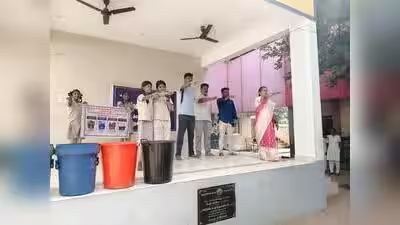
Student Ambassadors Planned to Promote Waste Segregation in 383 Trichy Schools

A new school-based waste-management initiative has been planned in Tiruchirappalli district, with student ambassadors expected to play a key role in promoting waste segregation across 383 schools. The initiative aims to encourage students to separate waste at the source and develop environmentally responsible habits that can extend from schools into homes and communities. Objective of the initiative The primary objective is to improve awareness about waste segregation at source. Instead of mixing all waste together, students will be encouraged to separate different types of waste before disposal. The programme is intended to help students understand that proper segregation makes waste collection, recycling and treatment more effective. The initiative also seeks to turn schools into centres of environmental awareness, where students can influence their families and neighbourhoods through the habits they learn at school. Student ambassadors Selected students will act as “student ambassadors” for the waste-segregation campaign. Their role will be to encourage classmates to follow proper waste-disposal practices and help spread awareness about the importance of keeping different categories of waste separate. Student ambassadors can also help teachers and school administrators conduct awareness activities, monitor participation and motivate other students to adopt environmentally friendly practices. 383 schools to participate The programme is planned to cover 383 schools in Tiruchirappalli district, giving it a significant reach among schoolchildren. By involving hundreds of schools, the initiative can create a large network of young environmental volunteers who can spread the message beyond the school campus. Students can take the lessons learned at school back to their families, potentially encouraging households to adopt segregation practices as well. What is waste segregation? Waste segregation means separating waste into different categories at the place where it is generated. For example: The exact categories and collection arrangements can vary according to the local waste-management system. Why segregation is important When wet and dry waste are mixed, recyclable materials can become contaminated and more difficult to recover. Proper segregation allows waste-management workers to handle different materials more efficiently. Organic waste can potentially be processed through composting or other biological treatment, while recyclable materials can be sent for recovery and recycling. This can reduce the quantity of waste ultimately sent to dumping or landfill sites. Role of schools Schools are particularly suitable for environmental education because students can develop good habits at an early age. Participating schools can promote segregation through: Teachers can also incorporate waste management into science, social studies and environmental-education activities. Students as change-makers The most important feature of the programme is its emphasis on student participation rather than simply giving instructions. When students become ambassadors, they can encourage their classmates to practise segregation every day. They can also explain to parents why different types of waste should not be mixed. This creates a potential school-to-home-to-community chain of awareness. Benefits for the environment Effective waste segregation can contribute to: Benefits for students The initiative can also help students develop practical environmental skills. Rather than learning about pollution only through textbooks, students will be able to participate directly in waste-management activities. They can develop: The ambassador role can therefore combine environmental education with student leadership. Wider impact on Trichy The initiative has potential significance beyond the participating schools. Tiruchirappalli generates substantial quantities of municipal waste, and improving segregation at source is important for the city’s long-term waste-management system. If students consistently practise segregation at school and encourage their families to do the same, the campaign could help create broader awareness among households. Need for consistent implementation Awareness alone may not be sufficient. For the programme to succeed, schools and local authorities will need to ensure that segregated waste remains separated after collection. If students carefully separate waste but all categories are later mixed during collection or transportation, public confidence in the programme could decline. Therefore, proper coordination between schools, local bodies, waste collectors and recycling or processing facilities is important. Long-term objective The broader goal is to make waste segregation a routine habit rather than a one-time campaign. Student ambassadors can help maintain awareness throughout the academic year by regularly reminding classmates, organising activities and encouraging participation. If successful, the model could potentially be expanded to additional schools and adapted for other districts.

Breaking News

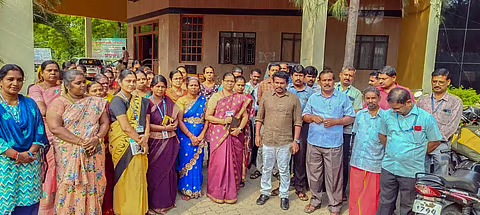
Village Assistants protest at Trichy Collectorate

Village Assistants (Grama Udhaviyalargal) staged a protest at the Tiruchirappalli District Collectorate, raising concerns over their service conditions, pay-related issues and other demands connected with their employment. The demonstration brought attention to the difficulties faced by village-level government staff who play an important role in supporting revenue administration. Who are Village Assistants? Village Assistants are grassroots-level employees associated with the Revenue Department. They assist Village Administrative Officers (VAOs) and other revenue officials with various administrative activities at the village level. Their work can include assisting with: Because they work directly with rural communities, Village Assistants are an important link between the administration and the public. Protest at the Collectorate The employees gathered at the Tiruchirappalli Collectorate to draw the administration’s attention to their demands. Protesters used the demonstration to seek government intervention and requested that their employment-related concerns be addressed. The Collectorate is an important administrative centre in the district, and demonstrations there often attract attention because they provide government employees and members of the public with an opportunity to directly highlight their grievances before the district administration. Main concerns The protesters’ demands reportedly relate to service and employment conditions. Village Assistants have periodically raised issues concerning salary, allowances, working conditions, promotion opportunities and other benefits. For government employees working at the village level, such issues can have a direct effect on their financial security and working environment. Workload and responsibilities Village Assistants often work at the grassroots level and may be required to assist revenue officials during various government programmes. Their responsibilities can increase during periods of: Protesters therefore argue that their employment conditions should reflect the responsibilities they undertake. Importance of their role during emergencies Village-level revenue employees can become particularly important during natural disasters. They may assist officials in identifying affected households, gathering information about crop or property damage and supporting relief operations. During floods or other emergencies, local-level staff can provide administration with information from villages much faster because of their familiarity with the area. Demand for government action The protest was intended to put pressure on the authorities to examine the employees’ concerns and take appropriate action. Such demonstrations are generally used to seek: Significance for Tiruchirappalli district The protest is significant because Village Assistants are involved in the functioning of the Revenue Department across rural areas of Tiruchirappalli district. Any prolonged dispute involving grassroots administrative staff could potentially affect routine revenue-related activities if employees resort to strikes or work boycotts. Resolving such issues therefore benefits both employees and the general public. Role of the District Administration The District Collector and Revenue Department officials have an important role in receiving employee grievances and communicating them to the appropriate authorities. Some demands can be addressed at the district level, while issues involving statewide service rules, pay scales or government policy may require decisions from the Tamil Nadu government. Broader issue The protest also highlights a wider issue concerning the role of lower-level government employees in public administration. Although they may not hold senior administrative positions, their work is important for implementing government programmes at the village level. Ensuring adequate staffing, reasonable working conditions and appropriate service benefits can help improve the effectiveness of local administration.

Breaking News

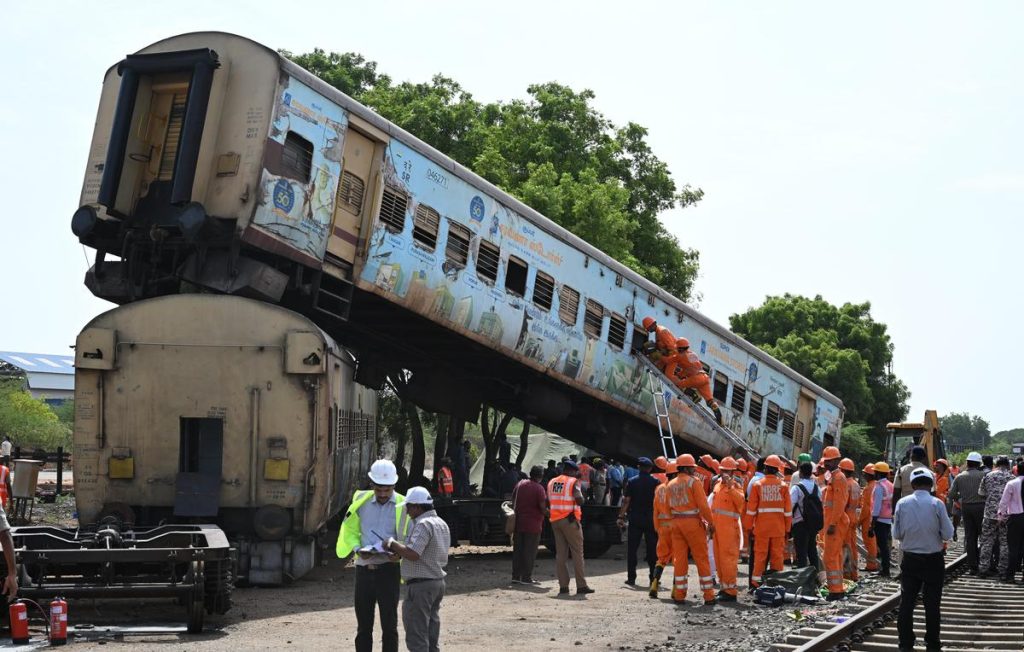
Railway disaster-rescue drill creates panic near Trichy Junction

A railway disaster-rescue mock drill near Tiruchirappalli Junction reportedly created temporary panic among residents and commuters after the emergency exercise simulated a serious railway accident. The sudden presence of emergency-response personnel, rescue teams, ambulances and other equipment made the situation appear to be a genuine railway disaster to people who were unaware that a drill was taking place. Purpose of the drill The exercise was organised as a mock disaster-management drill to test the preparedness of railway authorities and emergency-response agencies in the event of a major accident. Such exercises are designed to assess how quickly different agencies can respond to situations involving: The objective is not to create a real emergency but to simulate one under controlled conditions so that weaknesses in the response system can be identified. Why people became worried The drill reportedly created confusion because the rescue operation looked similar to an actual railway accident. The presence of emergency vehicles, rescue personnel and other response equipment near the railway area led some members of the public to believe that a serious incident had occurred. People who had not been informed about the exercise initially became concerned about the safety of passengers and railway operations. Emergency-response teams A railway disaster drill generally involves coordination among several agencies rather than the Railways alone. Teams may include: The participation of multiple agencies allows authorities to test how effectively they can coordinate during a large-scale emergency. Rescue operations During a mock exercise, rescue teams simulate the procedures that would be followed after an actual accident. These can include reaching the affected area, identifying injured passengers, evacuating victims, providing first aid and transporting seriously injured people to hospitals. The exercise also allows emergency personnel to practise communication between the railway control room, field teams, hospitals and district authorities. Medical preparedness An important component of a railway disaster drill is mass-casualty management. Medical teams practise: These procedures are particularly important because a major railway accident could involve a large number of passengers requiring treatment simultaneously. Testing communication systems The exercise also helps authorities test their communication and command systems. In a real railway emergency, information has to move rapidly between the railway control room, station authorities, rescue teams, police, fire services and hospitals. A mock drill can identify problems such as delayed communication, unclear responsibilities or difficulty accessing the accident location. Importance of Trichy Junction Tiruchirappalli Junction is an important railway station and railway operational centre in Tamil Nadu. Trichy has extensive rail connectivity to Chennai, Madurai, Coimbatore, Thanjavur, Rameswaram and other destinations. Because of the volume of passenger and railway activity in the region, emergency preparedness is particularly important. Public awareness The temporary panic caused by the drill also highlights the importance of public communication before major emergency exercises. When a large-scale mock drill is planned near a busy public location, advance information through railway announcements, local authorities and media can help prevent unnecessary fear. At the same time, authorities must ensure that the public understands that a mock drill is intended to improve safety and does not indicate that an actual accident has occurred. Importance of disaster preparedness Railway accidents, although relatively uncommon, can result in large numbers of casualties when they occur. Preparedness exercises therefore play an important role in reducing response time and improving coordination. Mock drills help emergency personnel become familiar with: Lessons from the exercise The drill can help railway and district authorities identify areas that require improvement. These may include access routes for ambulances, communication between agencies, availability of rescue equipment, evacuation procedures and coordination with nearby hospitals. The lessons identified during such exercises can subsequently be incorporated into emergency-response plans.

Breaking News

Trichy police warn public about rising digital-arrest scams

The Tiruchirappalli police have warned residents about the growing threat of “digital arrest” scams, a form of cyber fraud in which criminals impersonate police officers, CBI officials, customs officers, judges or other government authorities and frighten victims into transferring money. The warning is particularly important because these scams rely heavily on fear, urgency and impersonation rather than conventional hacking techniques. What is a digital-arrest scam? A digital-arrest scam usually begins with an unexpected phone call, WhatsApp call or video call. The fraudster claims that the victim’s Aadhaar, bank account, SIM card, parcel or identity documents have been linked to a criminal case. The victim may then be told that they are under investigation and must remain on a video call while the alleged officials conduct an investigation. The criminals sometimes tell victims that they have been placed under “digital arrest” and cannot leave their home or disconnect the call. There is no legitimate legal concept under which an ordinary police officer can place someone under a so-called digital arrest through a video call and demand money for release. How scammers create fear The scammers typically use an official-sounding identity and create a sense of emergency. They may claim: The objective is to make the victim panic before they have an opportunity to verify the claim. Fake police and government officials Fraudsters may use police uniforms, fake identity cards, forged documents and official-looking backgrounds during video calls. Some scammers even transfer the victim from one fake official to another—for example, from a supposed courier company employee to a fake police officer and then to a fake judge. This creates the impression that a genuine investigation is taking place. Demand for money After establishing fear, the criminals generally demand money. Victims may be told to transfer funds for: The scammers may promise that the money will be returned after the investigation is completed. In reality, the payment is simply a fraudulent transfer. Why these scams are dangerous Digital-arrest scams can cause large financial losses because criminals often keep victims on calls for several hours or even days. The victim may be prevented from speaking with family members and pressured into following the instructions of the fraudsters. Because the criminals create a highly convincing story, even educated and financially experienced people can become victims. Trichy police advisory The police warning urges members of the public to remain calm when receiving calls from people claiming to be government officials. The most important point is: No genuine police officer or government agency will conduct a “digital arrest” through a video call and demand money from a person to avoid arrest. If someone receives such a call, they should disconnect the call and independently contact the relevant department through its official contact details. Do not share personal information Residents should never disclose sensitive information to unknown callers, including: Banks, police departments and government agencies do not require people to disclose OTPs or UPI PINs over unsolicited calls. Do not install unknown applications Fraudsters may also instruct victims to download an application for supposedly completing a police investigation or verifying their identity. Such applications can potentially give criminals access to sensitive information or enable remote-control activity. People should therefore avoid installing applications sent through unknown links or messages. What to do if you receive such a call If someone claims that you are under digital arrest: What to do after losing money Speed is extremely important after a cyber-fraud transaction. Victims should report the fraud immediately through India’s official National Cyber Crime Reporting Portal or by calling the 1930 cybercrime helpline. Prompt reporting can help authorities and banks attempt to trace or freeze fraudulent transactions before the money moves through multiple accounts. Importance of public awareness The warning from Trichy police highlights the importance of cybersecurity awareness. Digital fraudsters continuously change their methods, but the basic strategy remains the same: create fear, establish fake authority, isolate the victim and demand immediate payment. Public awareness can significantly reduce the success of these scams. Special caution for elderly people Older people can be particularly vulnerable when scammers impersonate police officials or government authorities. Families should explain the concept of digital arrest scams to elderly relatives and encourage them to consult family members before making any financial transfer following an unexpected phone call.

Breaking News

Burglars steal 16 sovereigns of gold from Trichy house

A burglary involving the theft of 16 sovereigns of gold jewellery was reported from a house in Tiruchirappalli (Trichy), raising concerns among residents about security and property theft in the city. The incident is being investigated by the police, who are working to identify the people responsible and recover the stolen jewellery. What happened? According to the report, burglars targeted a residential house in Trichy and allegedly entered the premises when the occupants were away or when the house was vulnerable. The intruders searched the house and stole gold jewellery weighing approximately 16 sovereigns. One sovereign of gold is generally equivalent to 8 grams, meaning 16 sovereigns represents approximately 128 grams of gold. The theft was discovered after the occupants noticed that the jewellery was missing and informed the police. Police complaint Following the discovery of the burglary, a complaint was lodged with the police. Officers visited the house and examined the location to determine how the burglars gained entry and how the theft was carried out. Police are expected to examine: Investigation underway The police investigation is aimed at identifying the accused and recovering the stolen jewellery. Investigators may examine CCTV cameras installed around the neighbourhood, roads and commercial establishments. CCTV footage can be particularly useful in determining whether suspicious individuals or vehicles were present near the house around the time of the burglary. Police may also compare the incident with other recent house-breaking cases to determine whether the theft could be connected to a wider burglary network. Value of the stolen jewellery The 16 sovereigns of gold represents a substantial quantity of jewellery. The monetary value depends on the prevailing gold price and the type of jewellery involved. In addition to its financial value, gold jewellery can have significant personal and family importance, particularly when it includes wedding jewellery or other items accumulated over many years. Security concerns The incident highlights the importance of residential security in urban and semi-urban areas. Burglars may target houses that appear unoccupied for extended periods, particularly during holidays, travel or working hours. Residents can reduce risks by using: Importance of CCTV surveillance CCTV footage can play an important role in burglary investigations. Cameras positioned at the entrance of a house or along nearby roads may help police identify suspects, vehicles or the direction in which the accused travelled. Residents who have CCTV cameras should preserve footage when a crime occurs rather than deleting older recordings. Advice to residents The incident serves as a reminder that residents should take precautions when leaving their homes unattended. Expensive jewellery and large amounts of cash should ideally be kept in secure locations or bank lockers rather than being stored unnecessarily at home. Residents should also inform trusted neighbours when leaving town for an extended period and avoid publicly announcing travel plans. Impact on Trichy residents House burglaries can create anxiety among residents because they raise concerns about both property security and personal safety. The theft has therefore drawn attention to the need for stronger neighbourhood surveillance and faster reporting of suspicious activity. Police-community cooperation can be particularly useful in preventing property crimes. Residents should promptly report suspicious persons, vehicles or unusual activity rather than attempting to confront suspected criminals themselves.

Latest News

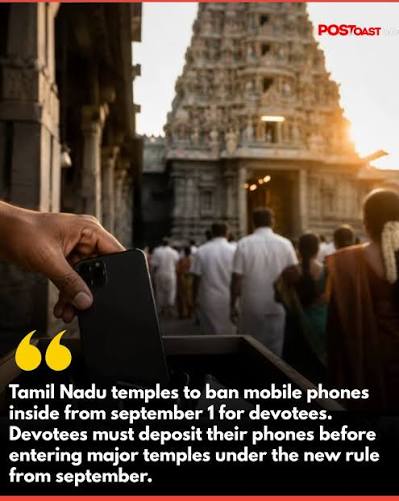
New restrictions announced on carrying mobile phones into HR&CE temples from September 1

The Tamil Nadu Hindu Religious and Charitable Endowments (HR&CE) Department has announced new restrictions concerning the carrying of mobile phones and other electronic devices inside temples, with the measures scheduled to take effect from September 1, 2026. The move is aimed at improving devotee safety, maintaining the sanctity of temple premises and ensuring smoother management of large crowds. New restrictions Under the new arrangements, devotees may be required to deposit mobile phones at designated counters before entering specified temple areas. Temple authorities are expected to establish suitable arrangements for safely collecting and returning phones. The restrictions are particularly relevant to temples that attract large numbers of devotees, where mobile-phone use can create crowd-management and security concerns. Why the HR&CE Department introduced the restrictions The decision is intended to address several concerns associated with the unrestricted use of mobile phones inside temples. One major concern is security. Large temples can attract thousands of devotees every day, and controlling the movement of people becomes more difficult when visitors are constantly using mobile phones for photography, video recording or other purposes. Another objective is to preserve the spiritual atmosphere and sanctity of temple premises. Temple authorities have increasingly attempted to discourage activities such as photography and video recording in sensitive areas. Crowd management Mobile-phone restrictions can also assist temple authorities in managing crowds. During festivals, special poojas and other important occasions, devotees often gather in large numbers. Stopping frequently for photographs or videos can slow the movement of devotees and create congestion. By limiting mobile-phone use, temple officials can encourage visitors to concentrate on the prescribed movement routes and maintain smoother queues. Photography and video recording A major issue behind mobile-phone restrictions is the increasing practice of taking photographs, selfies and videos inside temples. Some temple areas have traditionally been subject to restrictions on photography because of religious practices, security considerations or the protection of valuable objects and structures. The new measures are intended to strengthen compliance with such restrictions. Protection of temple property HR&CE temples contain valuable idols, jewellery, historic structures, inscriptions and other religious and cultural objects. Limiting photography and unrestricted movement with mobile phones can make it easier for temple authorities to monitor sensitive areas. It can also help prevent inappropriate or unauthorised recording of restricted areas. Arrangements for devotees The success of the new system will depend significantly on the arrangements made by individual temples. Temple authorities will need to provide: A well-organised deposit system is important because devotees may be concerned about the safety of their phones while they are inside the temple. Impact on major temples The restrictions are expected to be particularly important at large and highly visited HR&CE temples, where crowd density is high. Temples in Tamil Nadu regularly attract pilgrims from across India and abroad. Many visitors use mobile phones for navigation, communication and digital payments, so authorities will need to ensure that the restrictions are implemented in a practical manner. Emergency communication One concern for devotees is how they can communicate in an emergency after depositing their phones. Temple administrations may therefore need to ensure that emergency contact facilities and assistance points are easily available. Visitors should be informed about how to contact family members or emergency services when necessary. Public response The restrictions are likely to receive mixed reactions. Some devotees may welcome them because they can help maintain temple discipline and reduce distractions. Others may have concerns about the inconvenience of depositing phones, particularly when they use them for navigation, emergency communication or digital transactions. The effectiveness of the policy will therefore depend on how conveniently and securely temples implement the system. Significance for Tiruchirappalli The announcement is particularly relevant to Tiruchirappalli district, which has several important temples attracting large numbers of devotees throughout the year. At busy temples, controlling photography, mobile-phone use and crowd movement can be especially challenging during festivals and special religious occasions. The new restrictions could therefore become an important part of temple crowd-management arrangements in the district. What devotees should do from September 1 Devotees planning to visit temples covered by the new rules should:

listings
News
Home
jobs
Contact